
Unworthiness as the source of conflict

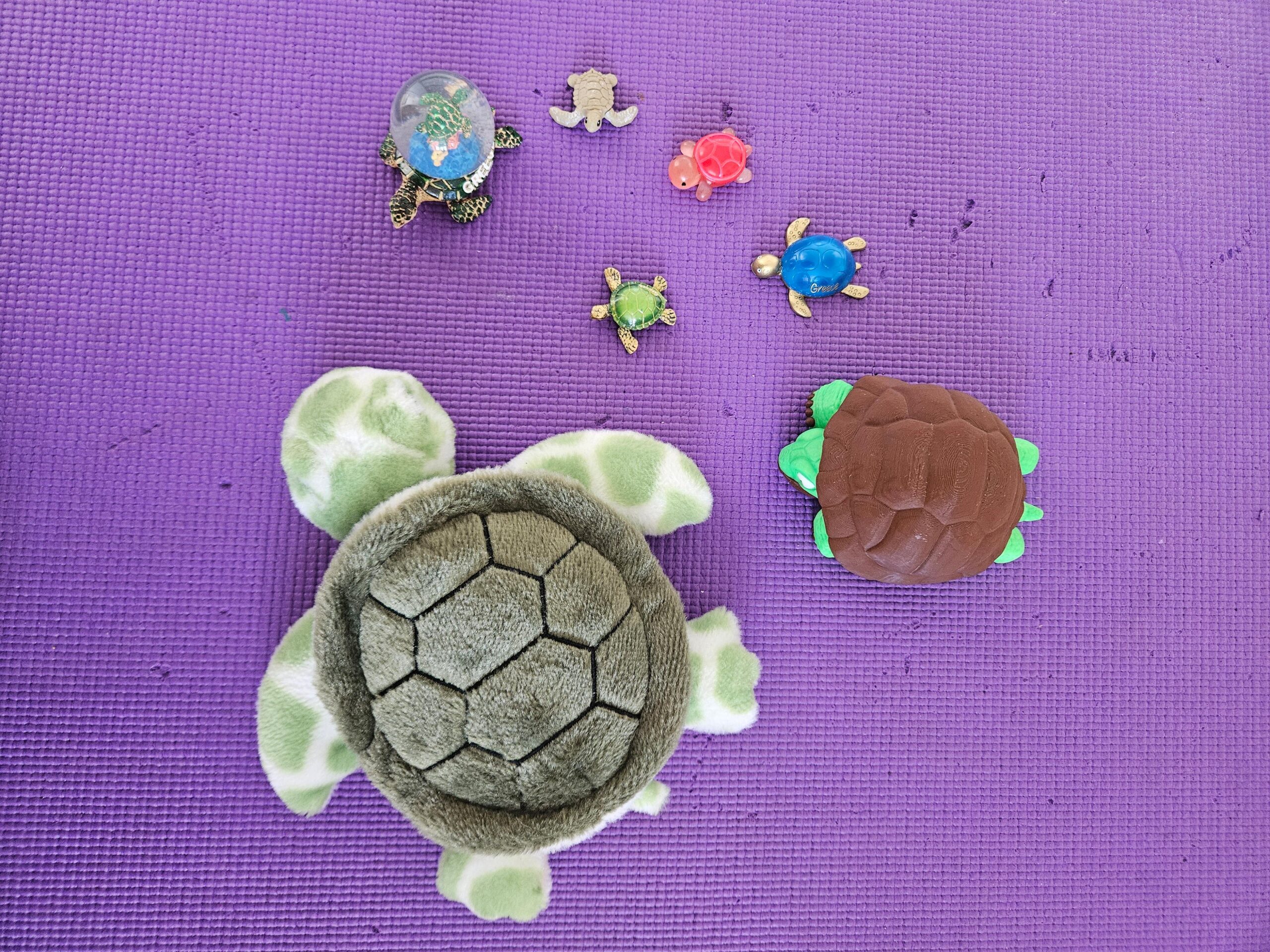
My son’s turtle collection

I know of several study programs for peace & conflict studies, but I don’t know of many (or any really) that talk about unworthiness as a source of conflict.

For me, not putting these two worlds together is a big miss. It means we spend time studying a conflict, understanding it but never really resolving the wars in the world. We can even learn conflict resolution strategies and still not end the cycles of wars.

Why is that? It’s because, in my view, the last place we want to look is inside our own unworthiness. We support an economic system that privileges a small percent, why? Because we believe more money makes us more worthy.

We don’t necessarily believe in our own being as worthy. We are often trying to prove ourselves worthy, through our relationships, our job, our action in the world. Of course we cannot maintain harmony with these entities, so any disharmony brings up unworthiness, which brings up the fight. It doesn’t seem like we are fighting ourselves, it seems like we are fighting the entity that our worthiness depends on. But actually, we are very often fighting against feeling unworthy.

With judgment as our weapon, we do a very good job of protecting our unworthiness. Keeping it as our king, not realizing that it’s also ruling over us.

Which school or university will teach skills that are needed to unravel the unworthiness that has been passed down generation after generation and is weaved into our political, educational, financial system?

I don’t know, but as I’m coming more into my own light, unraveling more layers of this unworthiness, I also take more steps to build this school, or this space. The voice of unworthiness would prefer this to move at cheetah speed, but in my core there is a turtle, patiently moving along, every day putting in the inner and outer work as needed.

As we get pushed towards the edge of these current systems, we will need new ones to uphold the new world. We cannot create this world with unworthiness as our ruler, as it is now. The new world (which in many ways is already here, we just have to surrender to it) is one where every being is inherently worthy and can shine their unique light, freely and equally.

This is what I spend my life on, one turtle step at a time, and I am grateful that I don’t have to realize it on my deathbed 🙏

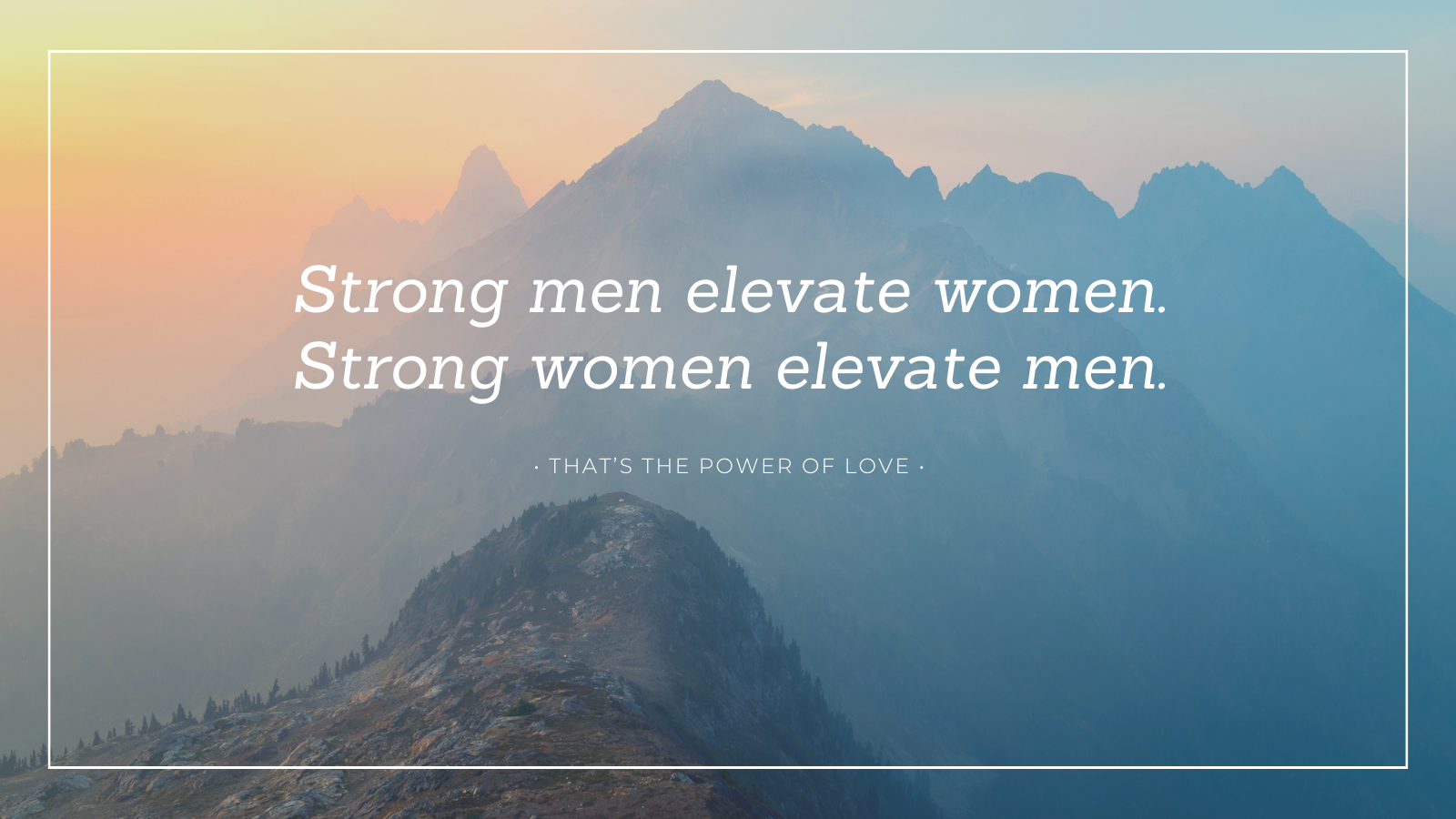
The Power of Love

Unpopular opinion – we need to take care of the men out there.

They are just as important as women. Why will people cringe at this statement? Because we’re so trapped in looking at everything through the lens of power dynamics. Through this lens, the solution to men ‘dominating’ certain industries is to have more women dominate. We’re still dealing with the dynamics of domination. Is that really what we need more of?

Let’s try another lens –

Men, just as women, need to find their inner strength. Weak men, as we see, are dangerous. Men that are disconnected from themselves, from their humanity, are not good for the world.

Men, just like women, are carrying a great deal of shame and emotional repression. And society puts a lot of guilt on men, making it even harder to be vulnerable, seek help and turn inwards.

It is not easy to be a man these days.

I’ve been in the democracy/inclusion/peace education space for a while, and I’ve seen some facilitators do this exercise about privilege, where they point out people’s varying starting points. I do a similar thing in my workshops, so it’s not about the exercise, but there is often a subtle association of privilege with guilt. It takes a skilled facilitator to move from guilt to responsibility, but often the facilitator does not even mind the guilt, especially if it’s towards a privileged and ‘successful’ man. They consider the exercise to be a success. I’ve talked to many in this space who feel that this is the education that is needed to balance out the scales.

I don’t think that’s the kind of balance we need. When I was in academia, the conversation about equality was always about equal pay. And yes, that’s one factor. But that is just one small factor, in my view. Equality is also supporting people equally, seeing that we are equally wounded. That our need for success and recognition is equal. That just because someone is at the top financially does not mean that they’re at the top emotionally, physically, mentally, spiritually. And same with the financial bottom – it does not make someone ‘less than’.

There are so many nuances here, so I hope people can read this without taking it to the extremes. I am, as always, talking about the power of love instead of the love of power. The love of power keeps us in power struggles. The power of love frees us from that, allowing every being to get what they need in order to connect them back to themselves.

Use Disagreement to Find Love Again

I grew up in a family with very different perspectives. I grew up between two countries, not really feeling like I belonged to either. This made it very difficult to find and feel at home, and it made me search – for home as a place, as another person, as an educational program, as an ideology, somewhere where I could feel whole. I was searching for certainty, for peace. 

But the fight always appeared. The triggers came. Critique and judgment were my weapons of protection but also destroyers of my peace. I found others with the same weapons, thinking we were fighting for peace but really just building bigger armies.

Thankfully, more pain came. A big breakup in 2013 shook my foundations to the core and made certainty impossible. I couldn’t pick up any new weapons and was thrown into the present moment. I just had to be in the pain.

But there was also a war raging, and instead of being in my own pain, I joined an activist movement. We were all united in our fight against the bad guys. It felt good for a while, I got the peace of belonging, but it created a big fight within my family. How could I be promoting peace if I was in conflict with my own family, the people closest to me? Thank God for this question, which accompanied me out of the activist circle and into a closer inquiry, an inquiry with my own self. There, again, I had to really meet pain. In doing that, I cleared the pipes for the love to flow again.

And this continued and still continues to this day. It’s my human journey. I find my path, my certainty, my peace, and then the friction comes. I learned the blessing of this friction, that brings me back to myself. That brings me back to love. 

When we have disagreements with partners, with people at work, with family members, we think these need to be solved. But from my experience, they don’t need to be solved, they need to be used. They are our best resource. We also think that all parties need to be a part of this process. They don’t. Only you do. This idea that the conflict will stop if someone else does something different will surely keep the conflict going. Because it already does not accept the other as they are. I’m not saying boundaries are not needed, and not every relationship can or needs to be restored. But there are a lot of relationships out there (intimate or otherwise) that actually can find love again. And it doesn’t take both parties, just one. 

It is so difficult to be in the pain of disagreement. I know it so well. But in my experience, learning how to use it towards healing can change the world. Right now, disagreement is our biggest resource. And God knows there’s enough of it, we just have to learn how to use it.

If you’re struggling out there with disagreement and fighting, and you want to talk it through, this is what I do in my work. I usually work with groups, but I’m venturing out to take on a few one-on-one sessions to try this out. If you are interested, reach out! It’s the most important work we can do right now. 

The Next Chapter

There are a lot of experts out there predicting the next chapter of humanity, and a lot of these are full of fear and suffering. These seem to be the ones that grab attention and trap us in a sense of hopelessness and despair. But we actually don’t know what the next chapter of humanity will look like.

What these experts can agree on is that we are at a turning point, and that is enough in itself. The rest is up to every person to decide – what is your turning point? Where are you going next?

The other day, my son was crying and annoyed about something, and he went through all the layers – anger, irritation, sadness, exhaustion. He was given the freedom to express all these feelings. But after a while, I noticed he was just in it as a habit, like there was nothing really pulling him out of the grump, so he stayed, stretched it out. It became a kind of comfort zone. I told him – you know what – this grumpy chapter is now over, you have to figure out what you want your next chapter to be.

We can easily find many reasons to stay in this chapter, there is so much suffering and pain to prove that we are stuck in this reality. But in doing that, we might miss the opportunity of the turning point. And I’m talking about on an individual level – what is your next chapter?

The more people that can individually grow into their next chapter, the more support there will be for humanity to move into a more beautiful next chapter. It’s already happening with small communities supporting each other in living more consciously, taking care of each other and the beautiful planet we live on.

The moment my son realized he had a choice, he just dropped the grumpiness. You could see him thinking about it, not really sure how to move forward, but with a few suggestions on what the next chapter could be, he chose to do one of his favorite activities – cutting out a drawing with scissors.

The violence may escalate, and things could get worse. But if we are not directly threatened, we do have a choice and a responsibility to respond in a way that reflects our next chapter. We could nurture our creativity, without attachment to a result. Suffering alongside is not going to help anyone. It just keeps us longer in this already-too-long chapter. Where will we go next? What is your next chapter? Let’s use this turning point to create a new reality.

Feeling and Learning

My son has learned the ‘h’ word, hate, and he uses it like this: When things don’t go his way or he doesn’t get what he wants, he casually proclaims ‘well then I hate you’. Not getting TV until after bathtime? Well then I hate you. Being told to stop doing something annoying? Hate you. At first it really bothered me, and I tried to rationalize my statements, “but you can’t just come and hit me”. Rationalizing to a 5 year old.. Eh, doesn’t really work. Then I tried to explain how harsh the ‘h’ word is. Then how untrue it is. Then the good old fashioned acceptance and ignoring for the 5 minutes he needs to hate until he loves again.

But one day something else came out of me, and that is to ask him – are you sure that you hate me, or is it that you don’t like the feeling you’re having? And we talked about how maybe a feeling comes up that I don’t like having and I blame the person who made me have that feeling. But it’s really the feeling that I am fighting, not the person. Maybe the feeling is “I did something wrong”, and it’s no fun to feel that way, or “I’m not getting what I want”, also no fun. He thought about it, and we left it there.

In last Saturday’s SEED event that I’m co-organizing, we started with a very simple little ice-breaker where a person has their hand on your back, and you have your hand on someone’s back, and for 5 minutes, you just receive their love and support. I realized how rare it is to sit in a space and just receive total love and support. We live in such a harsh world, where you are always up for critique. Self-critique, other-critique, job-critique, government-critique, world-critique. Not that these are not valid, and there is a certain amount of critique needed to change things, but I feel as a society we are off balance. The critique is not really helping us change anything, because we rarely address the feelings inside us that the critique helps us avoid.

Our natural state is to love and be at peace, but to think of a work meeting done in the spirit of love and peace, or a political meeting, seems so out of touch with reality. Why? Is it just because we’ve gotten used to it? At-least in the NGO sector, with people trying to make a difference in the world, this should be the case, no? It seems it’s quite the opposite, with the same power issues that exist in any corporation. The same pressure to perform, to be productive, not to expose any vulnerability.

In the last training that I facilitated, I made an evaluation sheet asking a few questions about the training. But I didn’t ask what could be improved or for them to rate on a scale how good were different parts (although, vegetarian food is not for everyone, message delivered 🙂 . This is not because I don’t want to hear critical feedback or get out of taking responsibility, but it’s because I wanted to operate at a different level – not what could be improved but what did you learn? Instead of the movement to evaluate and judge, what about finding the learning opportunity for yourself? Even and especially with parts that people didn’t like, or that didn’t go so smoothly. We tend to immediately try to find the culprit instead of the learning opportunity.

Now for you critical readers – don’t take this to the extremes. Critique is a valid mechanism that can help us grow and improve. And people need to be called out for harming others. But there are also ways that we give up on our own learning because the movement to critique is a habit. Probably formed when we were 5, when we got in trouble for doing something wrong and our parents reacted. We were honest back then with our ‘h’ word, now it’s covered in rational and intellectual reasoning.

The feeling of being wrong still holds many of us in an emotional prison and shapes our social and political world. We’re still the same 5 year olds sitting in those board rooms, fighting instead of feeling…

Boxing up activism

I have been writing a lot about my preferred form of activism, which has more to do with being yourself than fighting the system. But I want to clarify something, because I know this stance can be off-putting to those who are beyond frustrated with the current affairs and are desperate for change. Or for those who, without standing up to the machine, would feel they enable it to keep going.

I’m not against these forms of activism, and I think they have their place. I admire people who can get out on the streets of Minneapolis and stand up to ICE patrols, basically risking their lives, as proven. Or the people of Iran, desperate for change, dying in masses to protest their regime. Or the people of Israel and Palestine, out on the streets calling for a much needed regime change. You have to have serious balls to put yourself against the power of people in uniform. I don’t have that kind of courage.

But at the same time, my courage finds its place in other ways. In exploring the darkness within. In taking responsibility for my projections on others. In not continuing wars, and to take it even further, creating alternative spaces where peace can flourish.

Who is to say which form of activism is the ‘right’ one? For one person, posting something on facebook that aligns with their moral compass is their expression of what they can do in the world. It’s what they feel they can do in the moment. For another, it might be a realization that their energy needs to go elsewhere in order to maintain their wellbeing.

I once gave a workshop that had to do with left and right politics, and one person stated they really were not interested in politics, they don’t follow it, they don’t like it, they don’t know anything about it. I didn’t see this as ignorance. I saw it as a brave person taking care of their energetic needs. Not everyone has the same role in our society, and each person has a unique contribution to it, many times experienced in their presence and being, not only in their doing.

We have plenty of wars and battles going on. If fighting about how to address these battles becomes another battle, then man, we’re digging ourselves deeper. Let’s give each other a little space to figure things out and grow, instead of boxing each other in to ‘right’ and ‘wrong’ ways to make a difference.

Microphones and Behind-the-Scenes

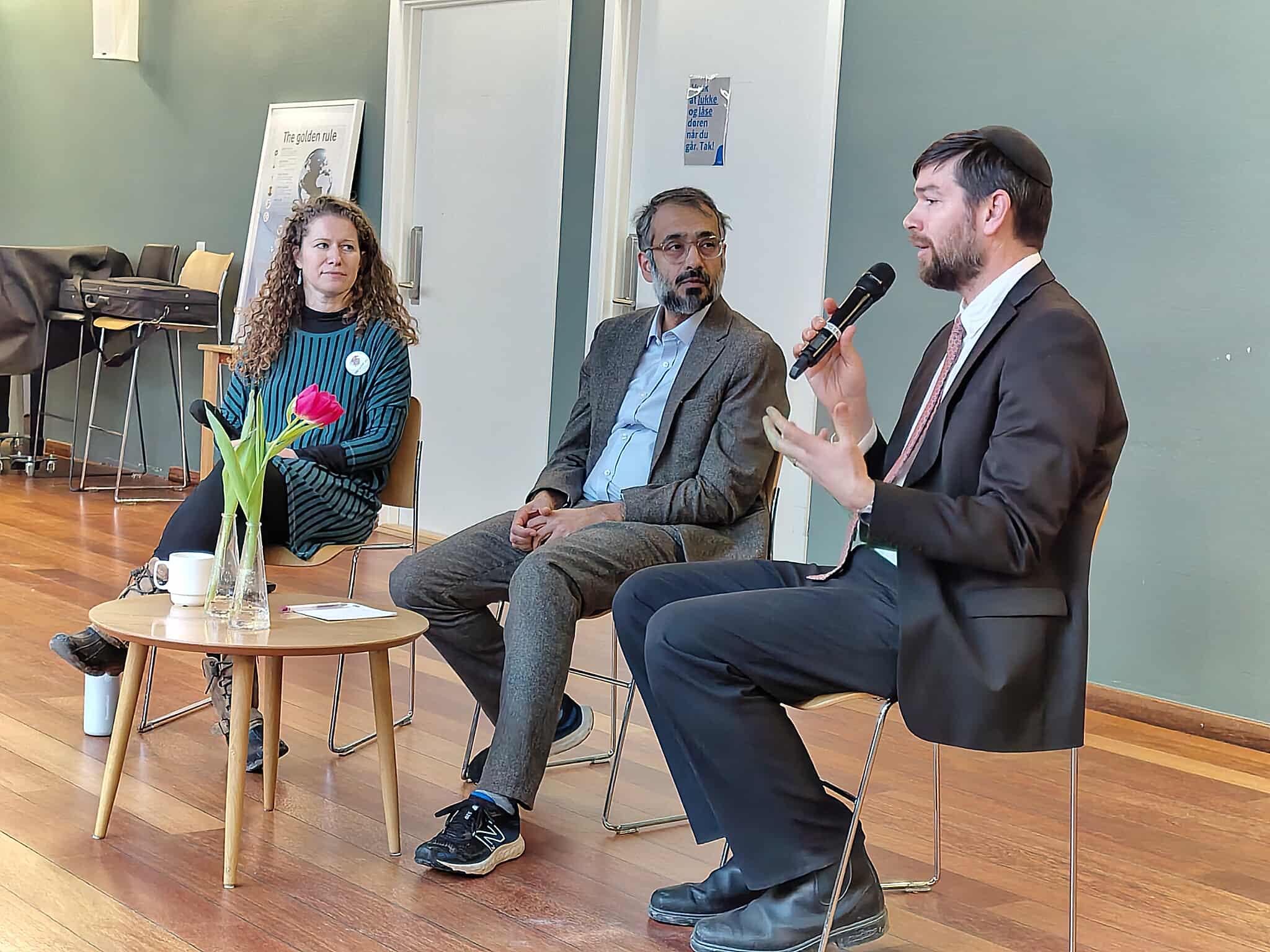
I spent this past Sunday at two beautiful interfaith events. The first, a celebration of the ending of Tro i Harmoni, an association for which I’ve been a board member for the last couple of years. I moderated a panel with a Rabbi and an Imam, and we spoke about the difficulties of interfaith work, both collectively and in personal relationships. We explored the question of whether coming to the table with anyone is the right step, or whether there are boundaries to this work. We talked about the different conditions people have in coming to the table, and how these conditions can be both protectors and barriers. We also talked about the alternative to always pointing to the problem, the role of empathy and visionary thinking that can imagine a different way to live. We had music, meditation, food and a presentation of different organizations that continue the work of inclusion and interconnection. It was a beautiful way to honor the work that Tro i Harmoni has done for the last decade.

The second event was also an interfaith event at the Church of Scientology. This included a series of speakers who spoke about their work with interfaith, inclusion, democracy and peace education, etc.

In both events, I ended up on the microphone, the first one moderating the event, including the panel (in Danish!), and the second one as an invited speaker. Both events were uplifting and unifying, highlighting the importance of interfaith work.

And this is where the ‘outward’ part of my post ends. I would also like to share some of my own behind-the-scenes inward journey. Continue reading if that’s interesting to you, otherwise you could stop here 🙂

—-

I wasn’t always so comfortable on microphones. As a kid I had quite some stage fright. In the 8th grade Passover seder that our class had to lead for the whole school, I had one line: “We eat bitter herbs to remind us of the bitterness that our ancestors had to endure while they were in Egypt”. Not only did I memorize it to the death, but I’m sure my close friends from then still remember that line on my behalf. There were a few other incidents of running to the bathroom to procrastinate giving a presentation. Or shakily delivering talks. Or wanting to be in the choir but not being able to stand the pressure of auditioning. A lot of stories that have turned into bedtime stories for my 5 year old 🙂

So the fact that I gave an improvised talk at the 2nd event was quite a feat. I challenged myself not to prepare anything and just speak from the heart. I did this last year, and I guess the church of Scientology is a comfortable enough place for me to practice this. I spoke about the need to meet each other’s pain, to be able to do that by meeting our own pain. I spoke about activism as something other than fighting the system. I spoke about the loud voices of power and the quieter movement happening in the background. And I spoke about peace. The peace that will really come to this planet. Imagining, feeling and knowing this, a crazy thing to say at this time.

I spent the previous day with my cacao sisters in a womb healing ceremony, where we connected with our womb centers and the deepest darkest parts of ourselves. Without going into too many details (too late?), I really experienced that it physically hurts not to be myself. Parts of my body are actually in pain from this. All those layers of shame and hiding from being exposed, when in fact all I was hiding is myself and a longing to live in a peaceful and loving world. What a world we live in that you can actually get slammed with critique for speaking this out. I talked about this in the Scientology church – not the womb cacao part 😅– but the part where the need to be right and the seizing of power relies on another perspective being shut down. And beyond power, now we’re seeing that in the ‘high levels’, it’s also evil and very dark. And those people up there love to see us fighting among left and right politics, among different religions, different ideologies, we become their soldiers and let them work in the shadows.
But as those people in power come out of the shadows, so do the ones releasing their shame and daring to speak the truth. It’s an amazing combination. The microphones and the behind-the-scenes, working together. The performance being called out. The truth being spoken. Power doesn’t go down easy, so who knows what the next few months will bring. But I’m proud to be one of the many who are getting on the microphones, giving another voice to the peace calling us home.

If You Build It…

In getting in touch with one’s gift, or contribution, to this world, there is no competition around it. It doesn’t matter whether you give to one person or one thousand, every person has their unique role in the journey. The role of marketing then becomes less about getting as many clients as possible but more about putting yourself out there so that people are aware of you, and if they are drawn to your services, they come. I’m often surprised in my cacao circles that we are a small group, considering what I’ve received from Munay Healing is world changing. But then I remember that it doesn’t matter how many worlds, because it’s my whole world. So a whole world has been transformed. For someone else, it might be a different teacher or experience.

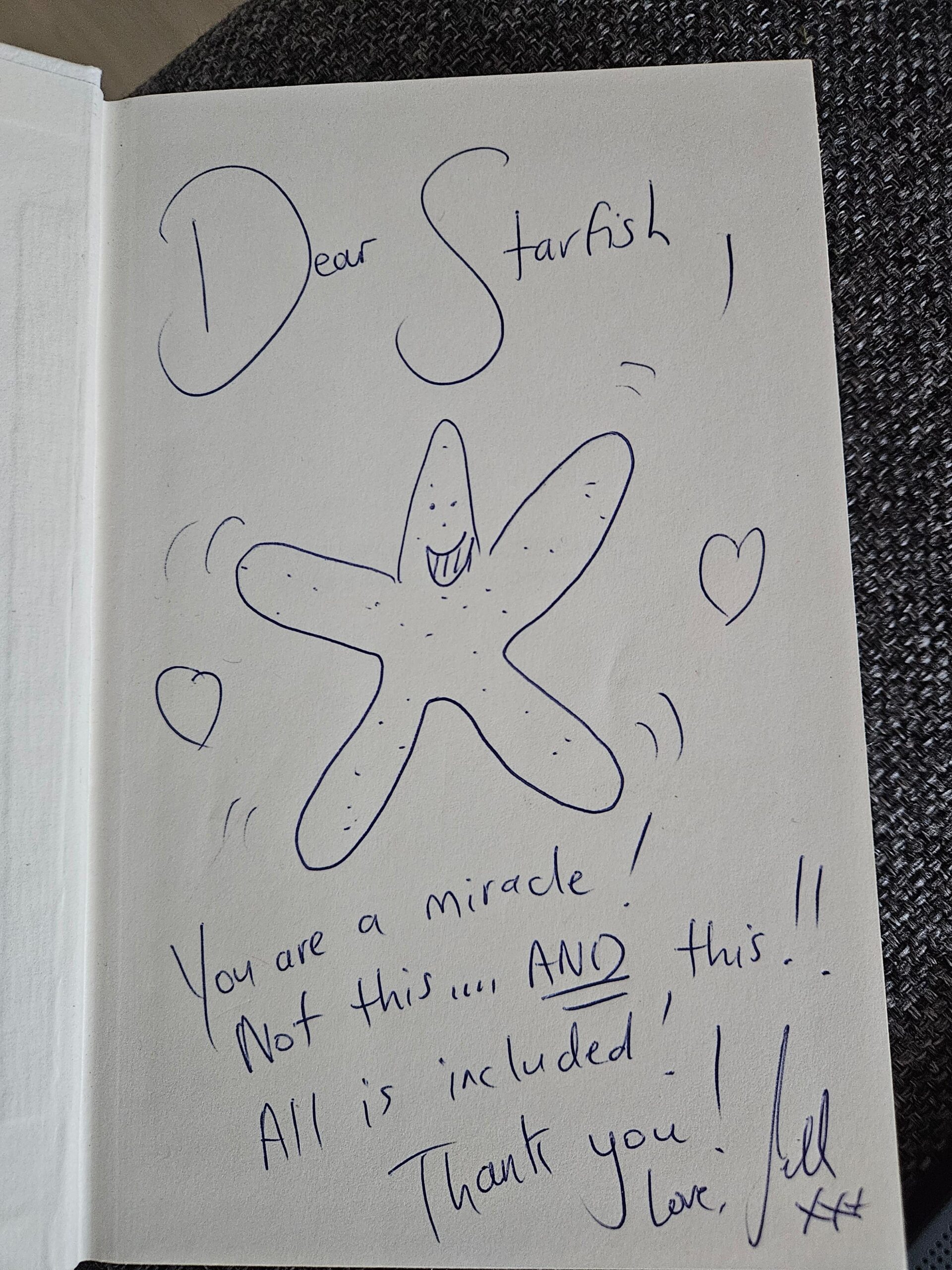
The spiritual teacher Jeff Foster used to tell this story about a child who wanted to save all the thousands of starfish who were beached on the shore, and was throwing them back one by one into the water. Someone passed by and asked, “do you really think you’re gonna be able to save all the starfish? There are too many and it’s not gonna make a difference to the majority”. “It made a difference to that one!” the child said and carried on.

So if you’re in the ‘business’ of making a difference, and it really comes from the heart, there is of course action, and there is discipline, and there is hard work, but there is no competition to take the ‘best’ spot. Moreover, the ‘best’ spot is not necessarily the one that attracts the most people, or the most money. Imagine if this was our reality? The only reason it’s not our current reality is that the majority behaves in that competitive way, not accepting ourselves and our role in the world. What else could keep such a reality going? It’s another subtle battle that keeps us trapped in the fight against the current system instead of creating our own. Creating our own builds an alternative without having to destroy another. “If you build it, they will come”-style.

The Israeli Elephant

picture by Said Ramin Rahimi

Sometimes I wonder when I’m giving a workshop or a training, whether there is an elephant in the room about me being originally from Israel, or the method being originally Israeli. With European audiences, it is often the case that they wondered about it, or even had some aversion to joining the training because of the Israeli label.

On the last day of the training that took place 24-29th October, 2025, I asked the participants if they wanted me to talk about that part, and there were a lot of nods. I shared a little bit about my own journey with how I think about the conflict, the occupation, the atrocities happening over there, how I was personally affected, etc. As we opened up the conversation, I realized this topic was indeed relevant for some people in the circle, and we started to have an honest sharing about it.

Someone said he was worried this would be Israeli propaganda. Another said she considered making the moral decision of not joining. Another said she had to do a bit of background research on me before coming.

I could have gotten defensive. I could have taken it personally, and I could have made myself into a victim of discrimination. I could probably even register it with the anti-semitism police.

But I didn’t. Because we were sitting in a circle, sharing our truths, and that was already doing the work. The work is not to convince each other what’s the right thing to do, because everyone has their own version. But to accept that everyone has their own version. That’s what people miss, and that’s what makes us even more divided.

I understand that people have boundaries in terms of what they can accept, but in my experience, not accepting someone’s version of truth does not make it go away. It actually means going to war. And war is what we are trying to stop (right?).

This is hard, and it’s controversial, because everyone wants the outside world to reflect their ideology. And many people want to show that their truth is THE truth. It just doesn’t work that way. We need to pay more attention to how we put our truths out there, because that ‘how’ is creating a lot of war. The whole political arena is one big battlefield.

Because we just spent the week looking at this ‘how’ over and over again, we actually were able to have a loving and connecting conversation about a very divisive topic. And this is the type of political education that I’m so happy to be a part of. It’s not always easy, at times in fact very challenging to one’s own sense of self, but it’s worth the effort to build the world we want to live in.

Finding Peace in Times of War

original article published in Danish in Udsyn magazine (see Danish version below)

One day, this war will end. No war lasts forever. But do we have to wait until then to have peace? I say no. Peace can begin at any moment because it starts within—by being at peace with the present moment. When we resist what is, we create war within ourselves.

Every day, we fight countless wars—not just on battlefields, but in our hearts and minds. We wage war against certain emotions, against opposing perspectives. Some people feel attacked when they hear “Free Palestine.” Others go to war when they see an Israeli flag. We sustain these wars, seeking refuge in those who agree with us, drawing lines, testing loyalties. “Will they condemn this side or that? Will they show sympathy here or there?” We measure people by where they stand, reinforcing the very divisions that fuel conflict. Inner wars very quickly fuel outer wars. But if our inner wars can shape the world, why wouldn’t our inner peace do the same?

Peace does not belong to a side. It is not a position, nor can it be imposed or defended. There is no such thing as “fighting for peace.” Yet, peace does require effort—not the effort of battle, but the courage to examine our own wars. To look beyond the resistance. To face the parts of ourselves we have pushed away. To see ourselves beyond our national and religious identities. National and religious identities are not the problem; they can offer meaning, belonging, and strength. But when they become shields—ways to avoid fear, loneliness, or uncertainty—they create division rather than connection. A sense of community built on fear will always be fragile, always seeking enemies to hold itself together. True belonging does not come at the expense of our shared humanity—it strengthens it.

Some people will resonate with what I have written so far, while for others, it may feel unrealistic or empty. Many have reminded me that peacemakers were among those killed on October 7th. That this approach doesn’t work when people want to kill you. That violence must be met with force, or it will only grow. And so, the cycle continues—violence to stop violence, destruction to prevent destruction. Maybe, at this moment, that feels like the only way. But is it the way we want things to be?

At some point, we have to ask ourselves how to break free from these cycles. In Israel and Palestine, those working for a different future are often the same people who have learned to hold multiple perspectives. Even in their grief, even after losing loved ones, they refuse to see each other as enemies. I believe they exist because they have done deep peace work within themselves. They have used their pain not to fuel more war but to plant the seeds of something new.

All of this is possible. If we give more attention and energy to our inner world, we can begin to shift the outer one. Peace does not have to wait for the war to end—it can begin wherever we are willing to create it.

Dansk

At finde fred i krigstid

En dag vil denne krig ende. Ingen krig varer evigt. Men behøver vi at vente indtil da for at finde fred? Jeg siger nej. Fred kan begynde når som helst, fordi den starter indenfor—ved at være i fred med det nuværende øjeblik. Når vi modstår det, der er, skaber vi krig i os selv.

Hver dag kæmper vi utallige krige—ikke kun på slagmarken, men i vores hjerter og sind. Vi fører krig mod bestemte følelser, mod modstridende perspektiver. Nogle mennesker føler sig angrebet, når de hører “Free Palestine.” Andre går i krig, når de ser et israelsk flag. Vi opretholder disse krige, søger tilflugt hos dem, der er enige med os, trækker linjer, tester loyaliteter. “Vil de fordømme denne side eller den? Vil de vise sympati her eller der?” Vi måler mennesker på, hvor de står, hvilket forstærker de samme opdelinger, der nærer konflikten. Indre krige nærer hurtigt ydre krige. Men hvis vores indre krige kan forme verden, hvorfor skulle vores indre fred så ikke gøre det samme?

Fred tilhører ikke nogen side. Det er ikke en position, og det kan ikke påtvinges eller forsvares. Der er ikke noget, der hedder at “kæmpe for fred.” Alligevel kræver fred indsats—ikke kampens indsats, men modet til at undersøge vores egne krige. At kigge forbi modstanden. At møde de dele af os selv, vi har skubbet væk. At se os selv ud over vores nationale og religiøse identiteter. Nationale og religiøse identiteter er ikke problemet; de kan give mening, tilhørsforhold og styrke. Men når de bliver skjold—måder at undgå frygt, ensomhed eller usikkerhed på—skaber de division snarere end forbindelse. Et fællesskab bygget på frygt vil altid være skrøbeligt, altid søge fjender for at holde sig selv sammen. Ægte tilhørsforhold kommer ikke på bekostning af vores fælles menneskelighed—det styrker den.

Nogle mennesker vil genkende det, jeg har skrevet indtil videre, mens det for andre kan føles urealistisk eller tomt. Mange har mindet mig om, at fredsarbejdere var blandt de dræbte den 7. oktober. At denne tilgang ikke virker, når folk vil dræbe dig. At vold skal mødes med magt, ellers vil den kun vokse. Og sådan fortsætter cyklussen—vold for at stoppe vold, ødelæggelse for at forhindre ødelæggelse. Måske føles det på dette tidspunkt som den eneste vej. Men er det den vej, vi ønsker, at tingene skal være?

På et tidspunkt må vi spørge os selv, hvordan vi bryder ud af disse cyklusser. I Israel og Palæstina er de, der arbejder for en anderledes fremtid, ofte de samme mennesker, der har lært at holde flere perspektiver. Selv i deres sorg, selv efter at have mistet kære, nægter de at se hinanden som fjender. Jeg tror, de eksisterer, fordi de har gjort dybt fredsarbejde med sig selv. De har brugt deres smerte, ikke til at næres krig, men til at plante frøene til noget nyt.

Alt dette er muligt. Hvis vi giver mere opmærksomhed og energi til vores indre verden, kan vi begynde at ændre den ydre. Fred behøver ikke vente på, at krigen slutter—den kan begynde, hvor vi er villige til at skabe den.

Tali Padan