PhD, EBD (Everything But Defense): On Paving Your Own Path

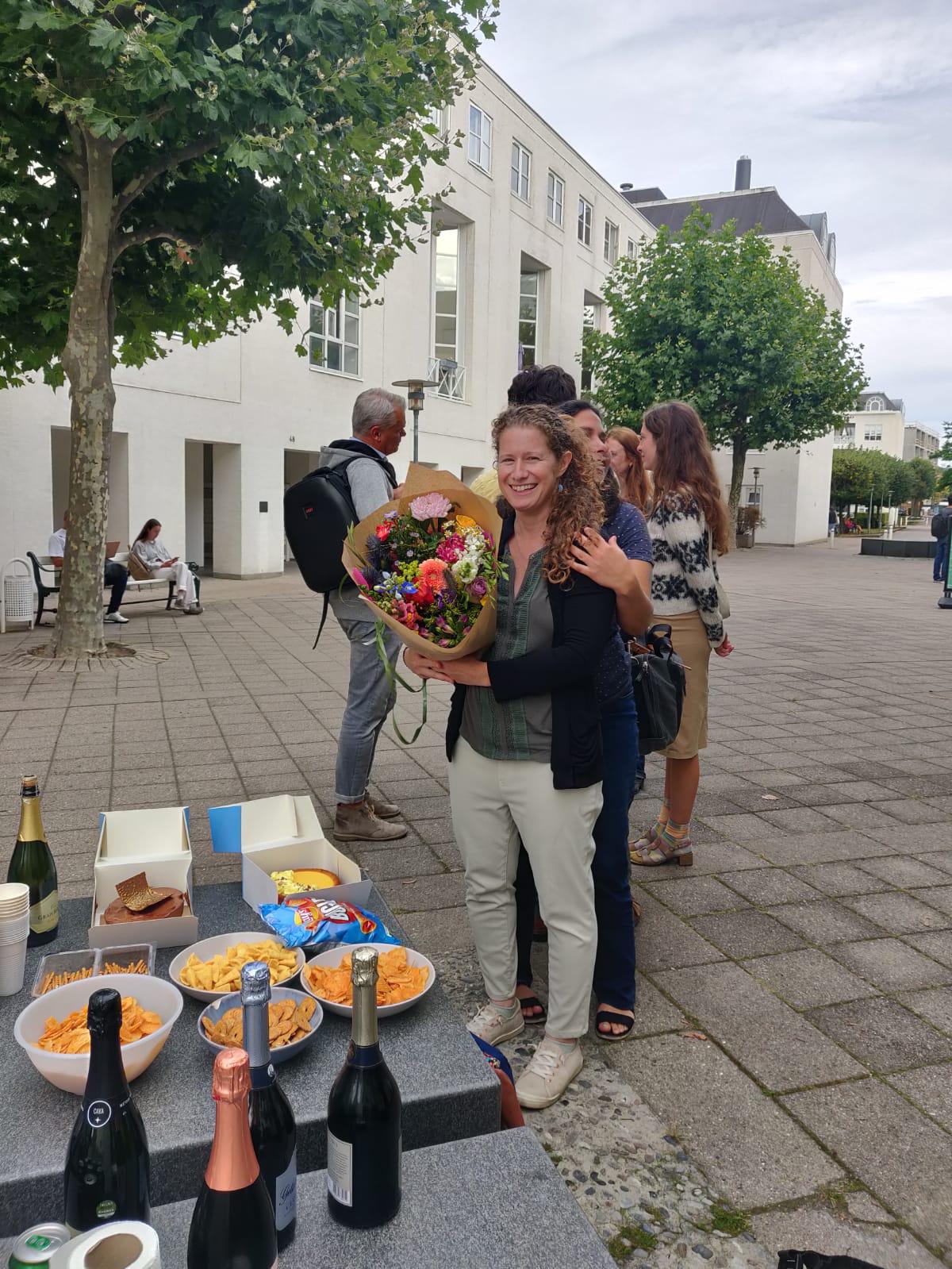
My self-organized PhD ‘defense’: 2 Sept, 2024

There are times that we are called to pave our own paths by being rejected from the mainstream paths. This is what happened with my PhD. I wrote a PhD about how dissonance can be a disruptive force that either encourages dissonance reduction strategies (staying on the path of habits and routines), or paves a new path of reflexivity, breaking out of existing assumptions and breaking open to embrace others’ perspectives. In the work, I showed and analyzed the learning process for those students who were able to take the alternative path. I showed how, through a facilitation of dissonance and a focus on process, students could be held and guided to embrace the dissonance and allow it to disrupt their own understandings of themselves. I shared their words and reflections, including their insecurities and confessions, the way they landed in uncomfortable truths, or just shared the discomfort of not feeling like they landed in any truth. The stories were very different, but each corresponded to the way they were able to undo a particular dissonance reduction strategy in themselves.

The assessment committee repeatedly rejected my research (three times), and with each rejection, I had my own dissonance reduction strategy to observe. Ultimately, the overarching pattern to undo was the fight towards having a committee validate this work. This fight was done by trying to conform, then trying to rebel, and finally putting down my weapons to surrender. That surrender made it possible for me to follow and carve a different path, an unknown one, which has no expectations and no guarantees. But it is time, and I am not the only one. I see a lot of people realizing that their struggle to fit in the mainstream may be the greatest opportunity to lead in the type of change that their hearts have desired for a long time. I often feel like gathering these people together in one room, but for now this blog post will have to do that work.

Some may still be wondering – why did the committee reject this work? What was their reasoning? This is a story that has a lot of different perspectives and dimensions to account for, if I want to do it justice. So for the purpose of this blog post, I will offer just one perspective, hoping the reader will keep in mind that this is only one way to see it. The PhD was done in a business school, with its own frameworks and trends of what constitutes original research. What appears to be the trend these days is to flip the good and prove it is actually bad. Studies that take something we appreciate – sustainability, humanitarian aid, digitalization – and show the darker side of these phenomena seem to gain the most traction. I have learned a lot from these studies, and I am not slamming this approach, because it also dislodges a belief system that helps us grow. My research was rather unfolding a learning process, instead of showing its darker side. But the committee wanted me to show the limits of reflexivity, or to show how the facilitation of reflexivity reveals an oppressive power struggle, where students could be manipulated or forced to be reflexive. They stated:

“Another possibility was to do a critical analysis of the power relations at play through the corporeal and affective politics of the facilitator-student relations in and beyond the management classroom; how the ways of facilitating reflexivity define what and who counts as ‘good’ in certain practices, about what expressions and emotions get recognized as ‘reflexive’; how that subjugates students in performing themselves as reflexive in forceful ways, and how that might teach them to think, act, and perform reflexivity and ‘negative capability’ along those specific lines outside the classroom – both as intended, but maybe also with unintentional side-effects (e.g. manipulation or ‘faking it’).”

Because of these suggestions, also stated in previous assessments, I included more reflections in the work on the possibility that students could fake their reflections in order to get a good grade. But I could not, with integrity, refocus the findings on these type of reflections, because I did not believe they were central to the research. The assessment committee rejected this work because they claimed they could not learn anything new, but in making these suggestions, they ironically demonstrate what they would consider ‘new’ learning. They critique my work for not having surprising findings, but they offer what they would consider surprising – would these really be surprising? Or simply fit into their framework of what is new and original?

As I see it, the assessment committee rejected my work because they were tied to a certain framework of what constitutes learning. This is also what I continuously stress to my own students, when I facilitate the workshops, that the learning process in this classroom may be different than how we were conditioned to learn, where after every class, you can clearly say what you learned. The course was a process of observation and reflection, the learning hidden in subtle shifts of reflection focus. It is this process itself that is the learning, not meant to be checked off as testable learning outcomes. The way that students increasingly paid attention to the process is the way they learned. And in this way, the result of the PhD is perfectly aligned to demonstrate this –  the result failed so that the process can shine. And now I feel all the more emboldened to carve this alternative path of learning, instead of giving power to existing frameworks and then being forced to defend my stance. This fight is over.

  • Tali Padan, PhD, EBD (Everything But Defense)
Why Are You Here?

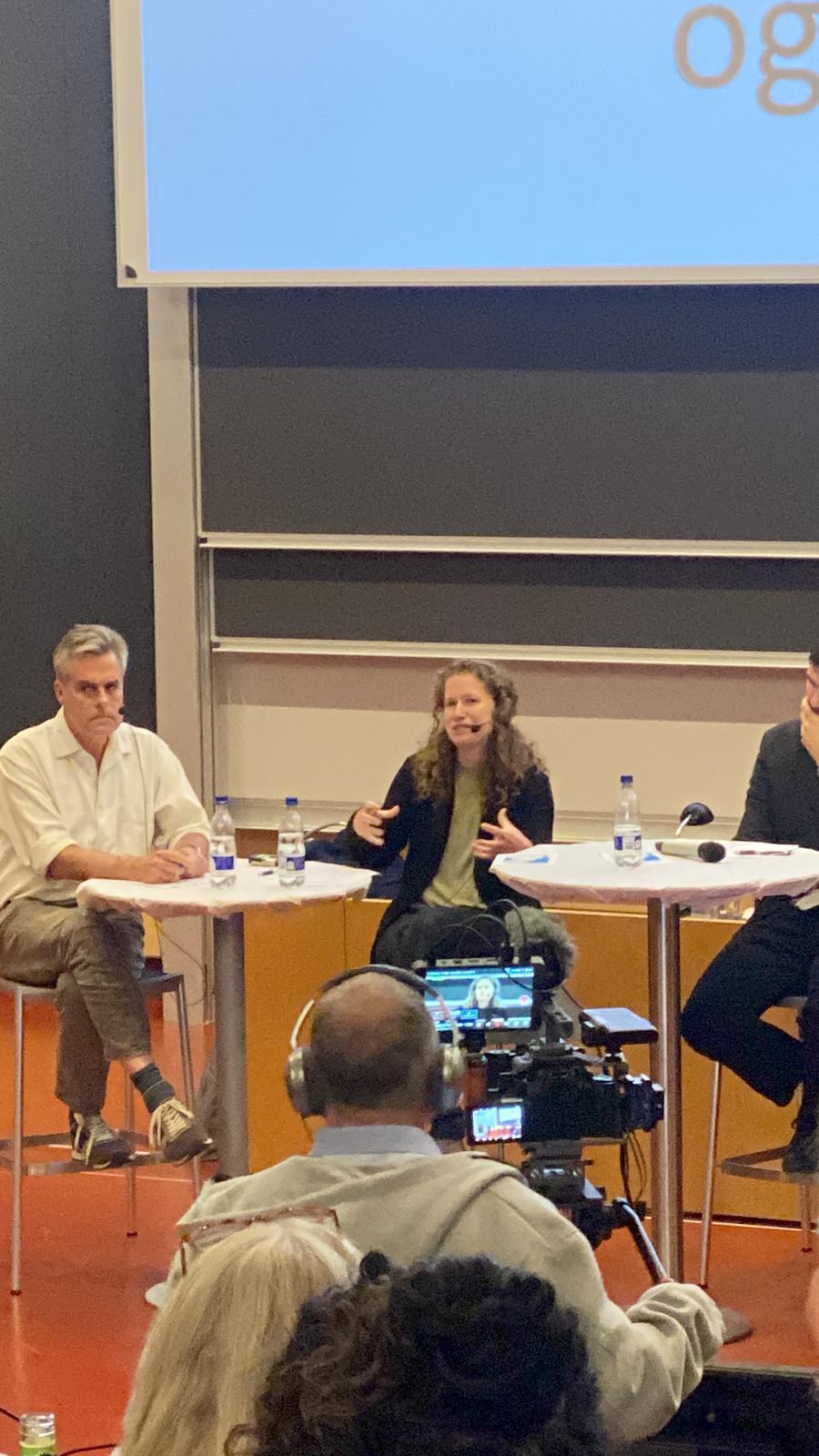
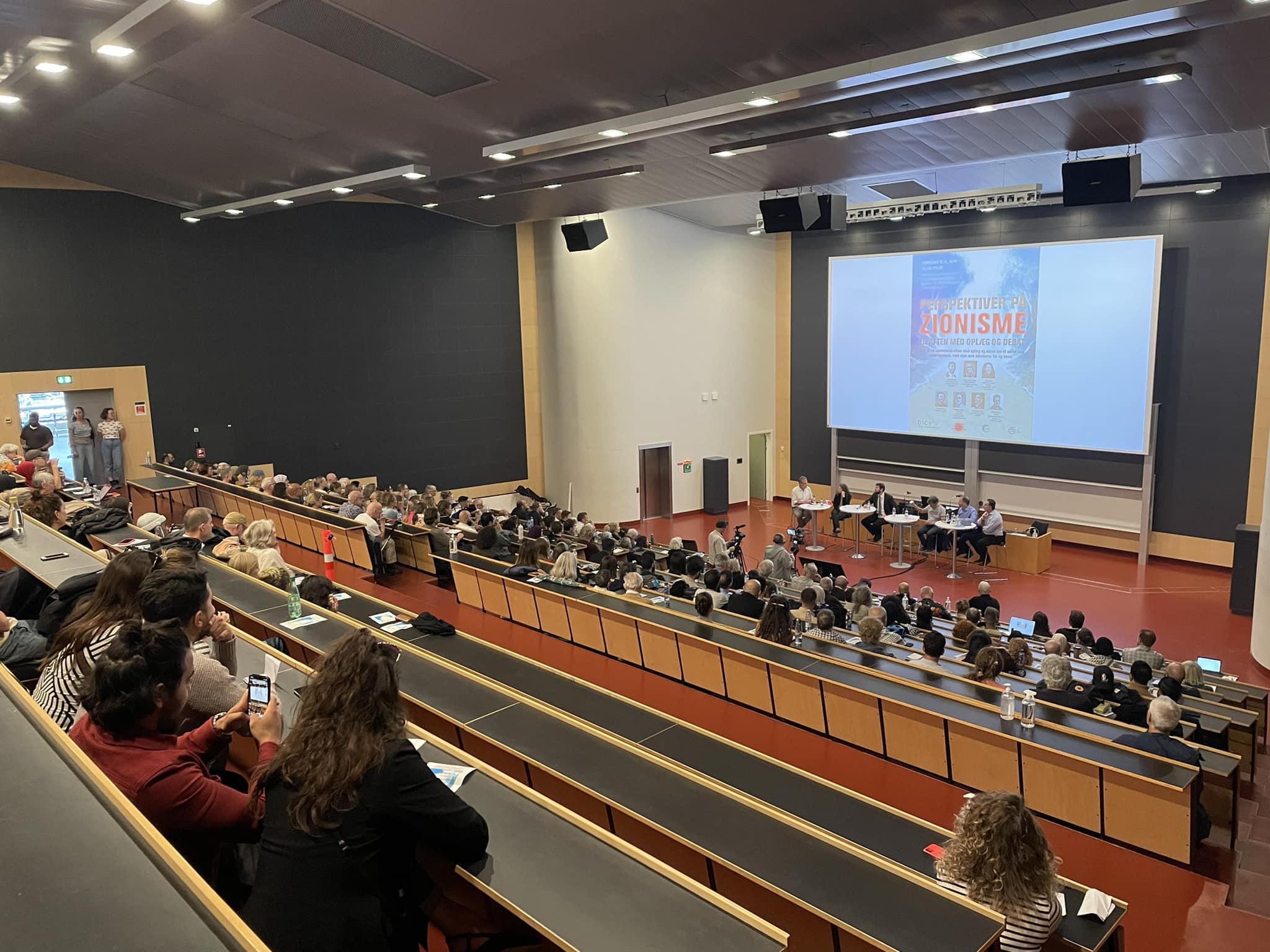
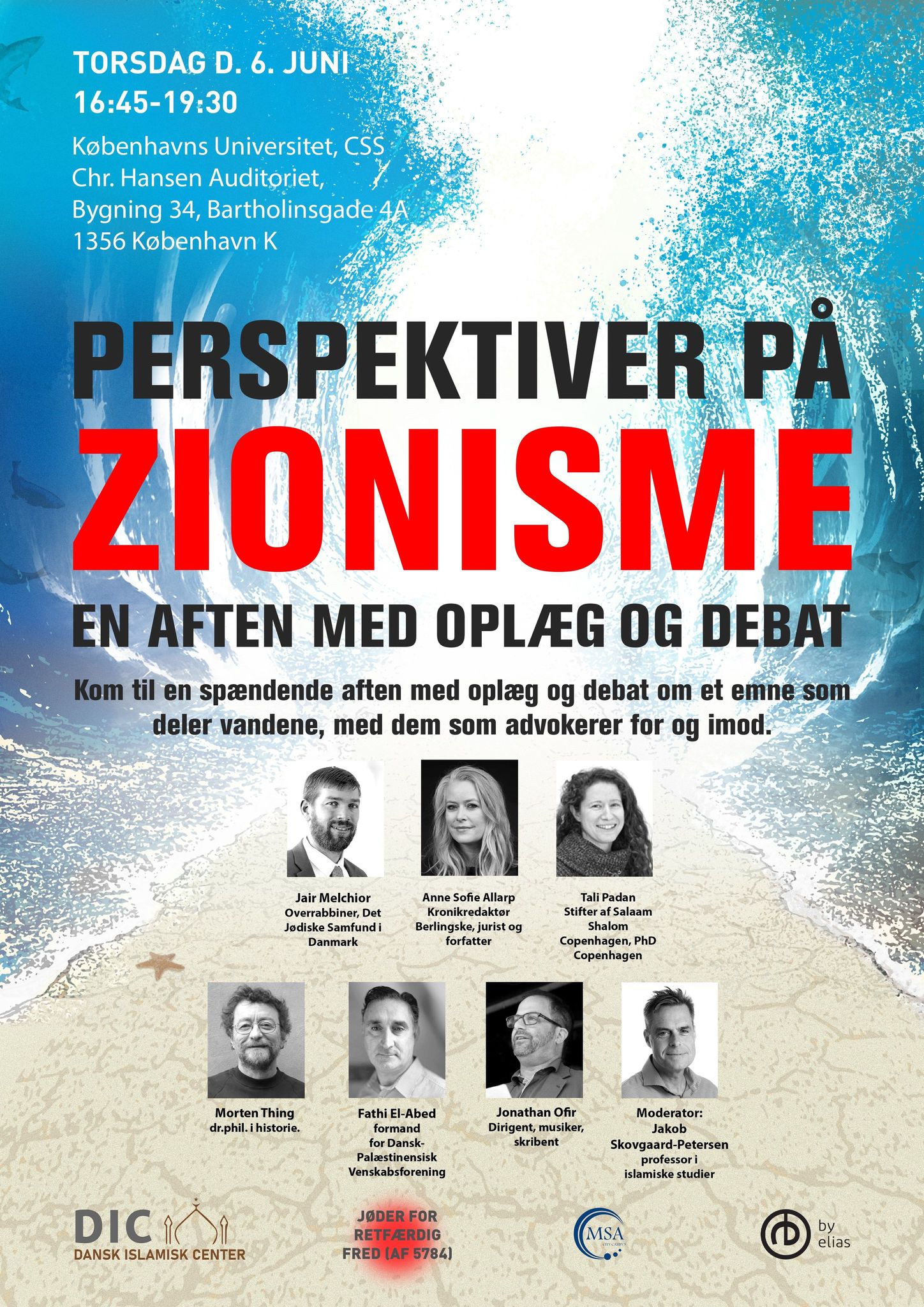
I was invited to speak on a panel about Zionism. Those who know me and my work may find it strange that I would speak on such a panel, but the organizers wanted to include diverse perspectives. It takes somewhat of a risk to do this, and I appreciate their openness.

In my talk, I shared that I would not speak about Zionism, as content, but speak about the ways in which we engage in the debate about Zionism, which I claim is just as important to the learning process. I introduced the concept of dissonance, the clash between old and new perspectives, and our natural inclination to reduce dissonance so that we can stay in the comfort of our own worldview.

I shared the value of lingering in dissonance through a personal example of my own dissonance. Around ten years ago, when I first moved to Denmark, I found myself in a very unstable and dissonant state. Because I was in this state, I was able to open up and ask questions about stable knowledge that I grew up with.

It was during this time that I attended a talk about Gaza and found myself upset by the difficult pictures of wounded and dead children. I asked the presenter why he was only presenting one side, which was my way of trying to reduce my experience of dissonance. We sat and talked for several hours after that, and I realized that there was a lot I was missing in my upbringing in terms of understanding the suffering of the Palestinians in the last 70+ years.

With this new knowledge, I started to attend demonstrations and post on Facebook these new perspectives, hoping that my Jewish family and friends in Israel and the US would also come to understand this new world that I had just been exposed to. But it doesn’t quite work that way. The opposite happened. People, my family included, started getting very upset at these posts.

Again – dissonance. After struggling for some time trying to reduce this dissonance by trying to win arguments (an endless game with no winners), I decided to try something different. After all, how could I claim to be fighting for peace when I am in conflict with the people I love most? So instead, I worked more deeply to understand where they were coming from. Second and third generation from the Holocaust, they see Israel as a place of security and belonging. They carry the fear of not having a safe space. All of these are just as real.

I explained to the audience that when people share views that are anti-Zionist, many Jews and Israelis do not hear that as an attempt to reshape the demographics of Israel/Palestine while keeping both sides safe and in peace. People hear that as an attempt to erase them, to wipe them off the map. No amount of ‘but that’s not what I mean’ will help.

Out of this grew my passion for sitting in circles. Not only to share and be cozy but to really work through democratic processes and invite dissonance. By reflecting on the ways in which we try to reduce dissonance, we can open up to new perspectives – not just understand them cognitively but take them in as our own, a big difference. This is an opposite force to polarization.

At this point, I was running out of time and stumbling around in my broken Danish, but if I could have continued, I would have shared a bit more about my PhD research and the results of my study. As I studied these circles, I found that dissonance can lead us down two paths. You can choose to reduce dissonance, which gets easier and more automatic as you hang out only with people you agree with and watch media that confirms what you think. OR you can reflect on dissonance reduction strategies and allow new perspectives to come in to your experience, a process opposite to polarization, of inclusion and integration. With practice, you can also get better at this skill.

Ultimately, I take it for granted that we want things to change. We want the war to stop. We want peace and security for all sides. In order to change, we can’t keep throwing our opinions at each other. After hearing the rest of the panel and the boos and claps of the audience, I had to ask the audience –

Are you really here to learn? Or just to confirm what you already know? And that goes for both ‘sides’.

I stayed quiet for the rest of the conversation because it was the usual back and forth of trying to win a debate. For some, it might have looked weird that I was the only one not participating. The moderator tried to bring me in, but I could not really connect to the question, and we were already too deep in the debate format.

A man came up to me after the talk and asked ‘why are you here?”. I tried to explain that if we want to learn about a topic, we also have to look at the things blocking us from learning. He asked again, ‘yeah but why are you here?’. This was not an attack, he genuinely was trying to understand the relevance of my perspective. It was as if he was saying ‘we’re trying to argue here, why don’t you have an opinion?’

You could say the event was disappointing because of this endless back and forth. But you could also say that it was inspiring. Because it exposed an absurdity. I have over ten years of expertise in dialogue processes and even longer as an educator. In an event with the supposed aim of learning, I shared what can help us learn. And, it is difficult to figure out why I am there.

This is not a critique on the panelists or the organizers, but this is a reflection of the world we live in. As more and more power structures get exposed, globally and personally, we can see how the power method just does not work. Trying to win a debate will not help to understand Zionism, nor will it help to achieve the things that I believe, in our hearts, all of the panelists wish to achieve. We just couldn’t get to that place, in the debate format.

To be fair, a few lovely people came up to me after my talk and could really see the relevance. These are also our warriors… mostly soft-spoken but fierce with their commitment to freedom and peace.

My 3 year old son looked up at me this morning with his big curious eyes and asked, ‘Mama, what does love mean?’.

I couldn’t answer him. Some things you have to show and not tell.

From Little Things Big Things Grow

by Emma Liddy

 IMG_001-015Religious holidays are celebrated all over the world. The people, places, beliefs and times change; but it would be difficult to find anyone who has grown up without having experienced tradition; the lead up to and participation in marking the occasion, whatever occasion that might be. These holidays become part of our identity, regardless of how relevant the holiday or the religion is. The tradition and ritual takes on its own meaning to us, the coming and going of these festivities mark the progression of the year just like the seasons. The holiday continues to be a part of us either because we continue to celebrate it, or because we make a conscious decision not to.


In the home I grew up in we celebrated religious holidays, like Christmas and Easter, with custom and ritual. Our traditions were built around the food we shared, the games we played, and the music we listened to; religion never really came into it. These days came around every year and unfolded like a well rehearsed play. With devotion my mother would cook a heavy Danish Christmas lunch in the heat of an Australian summer. Christmas carols would be given a little time before we switched back to Bob Dylan or Paul Kelly, our homegrown folk singing hero. As I’ve grown older, the Christian element of these days has slid almost entirely into oblivion, but I continue to recreate the smells and tastes and sounds and celebrate these holidays in this way, because that is part of who I am.


Earlier this month, I had the pleasure of broadening my holiday horizons with some new faces, new smells, new tastes and new songs – and for me at least, a new holiday. It was a Passover Seder, a Jewish custom to celebrate freedom from slavery. It was organised by an Israeli-American friend of mine. She wanted to recognise the holiday, a way to connect with that part of her identity. But she also wanted to share the experience. Instead of letting religion define the night and decide who should enjoy all the fun, this would be open. Passover for everyone.


Around thirty people came to be a part of the evening. Most of us didn’t know each other beforehand and had found out about the event through friends or on facebook. We had prepared a couple of traditional Seder dishes; matzah ball soup, gefilte fish. We sang some of the songs special to this holiday. We dipped parsley in salt water and marked our plates with drops of wine for each of the plagues the Jews were protected from, as the story goes. It’s these things that made it a Passover celebration. But there was more to this Passover Seder than these customs.


This was Passover for everyone. So what does that mean? To list us by countries, we were from Denmark, Sweden, Israel, Palestine, Syria, Afghanistan, Germany, Czech Republic, Russia, Greece, Congo, Sudan, USA. Of course some had celebrated passover before, but many of us hadn’t. I think it’s fair to say that some people there would never have believed they would one day find themselves sitting around that table, in that company, celebrating that holiday.


The people who came each brought with them a personal history. In many cases those personal histories, identities, are tangled up in bigger histories; in conflict and war, race and religion, oppression and the search for freedom. It was inevitable there would be different perspectives here. At one point, fairly early in the evening, it seemed the differences might be too big. Someone was asked where they were from and answered Palestine. The answer wasn’t good enough for the person asking the question – they don’t believe Palestine exists.


It was essentially the opposite of what we’d been hoping for the night. The evening was supposed to be about celebrating freedom. It was an attempt to take an event saturated in culture and religion and renew it by breaking down the boundaries religion and culture can create. The hope was to find the common ground we share as people, people who believe in freedom. This refusal to accept another person’s identity was not part of the plan.


Not everyone heard the conversation. Those who did responded differently. I can only speak for myself. At first I was horrified. I didn’t want the night to end in conflict. I hoped no one would feel they needed to leave. And no one did leave, no one shouted or yelled or threatened or abused. Instead of being a spark to blow the evening apart, I think this moment became the binding, the meaning for us all being there.


It was a stark reminder of a conflict that is easy to think of as unresolvable. But what followed was remarkable. People continued to talk to strangers and ask them who they were, where they came from. We finished eating. We kept drinking wine. There was dancing and laughing and serious conversation. It sparked discussion. Some people were upset but they were allowed to be. The division and difference between the people there was overwhelmed by decency and tolerance.


If a dominant mindset had forced one of those two to leave, and determined that one set of ideas was unwelcome, the entire meaning of the evening would have been destroyed. It would no longer have been Passover for everyone, but Passover for people who think like us. Instead that evening achieved what many people around the world would consider to be impossible.


To witness that happening was an extraordinary thing for me. And from the conversations I had that night I’m sure I’m not the only one who felt that way. The next morning reflecting on it all with my housemates, I was reminded of one of the songs from my personal history. That homegrown folk singer who makes up the soundtrack to my holidays tells a story in one of his songs about the struggle for identity and freedom of the Indigenous people of Australia. It’s called ‘From Little Things Big Things Grow’.


It’s hard to tell if the story of this night will make any sense to people who weren’t there themselves, just like that song that might not make sense to many people in this hemisphere. But what I experienced that night was that a small gathering of people in a university building in Copenhagen can defy what decades or centuries of conflict and bloodshed would define as possible. And I don’t think I was the only one who felt that. So if the people there can take that experience, that expanded sense of possibility, then we don’t always have to be boxed in as opposite people or opposite sides. It’s from these little things that big things grow.